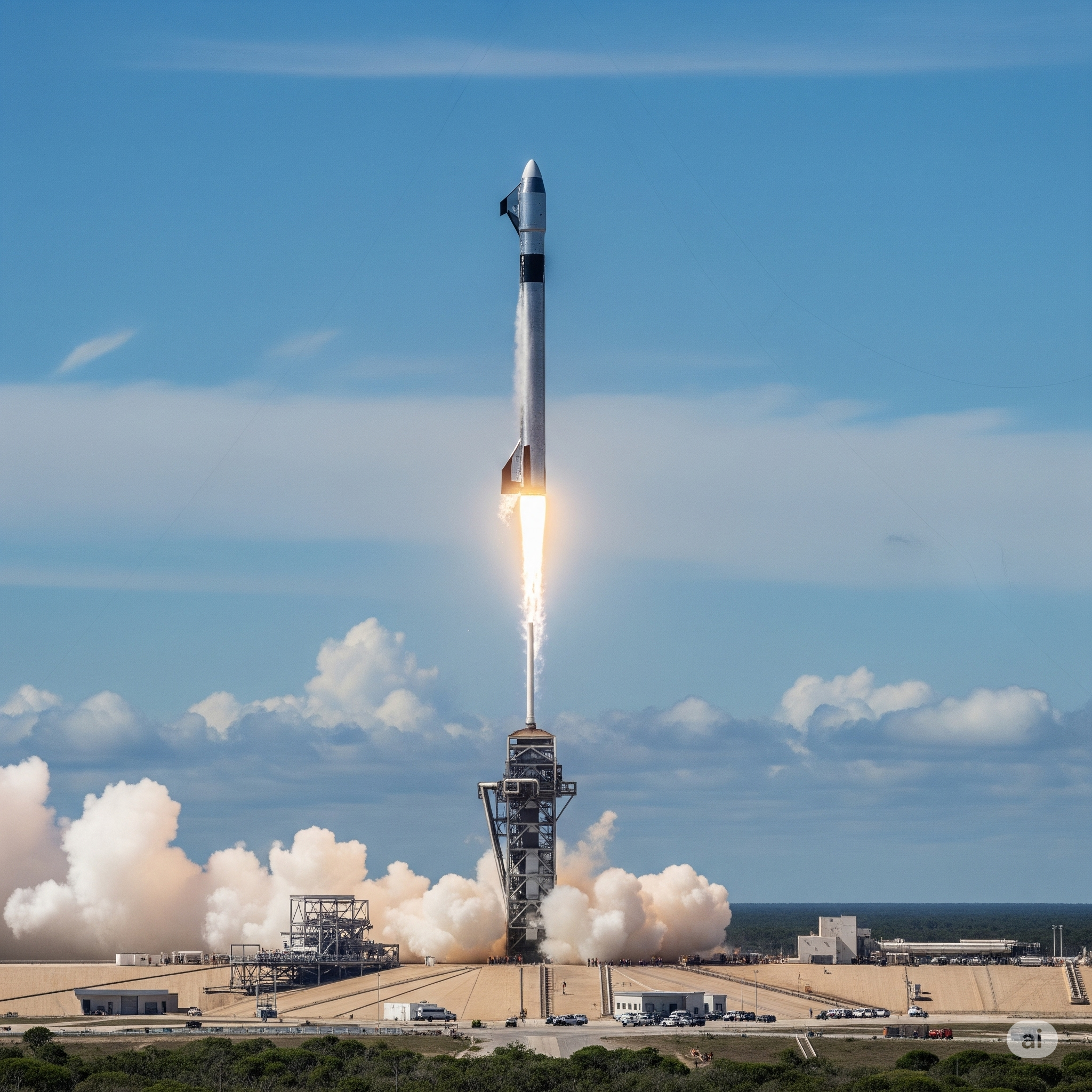

SpaceX continues to push the boundaries of spaceflight innovation, and on May 27, 2025, it achieved another major milestone with Starship Flight 9. This mission, launched from Starbase, Texas, brought new advancements, valuable data, and a glimpse into the future of deep space exploration.
Let’s break down everything you need to know about this fascinating launch, point by point.
1. 🛠️ The Hardware: What Flew?
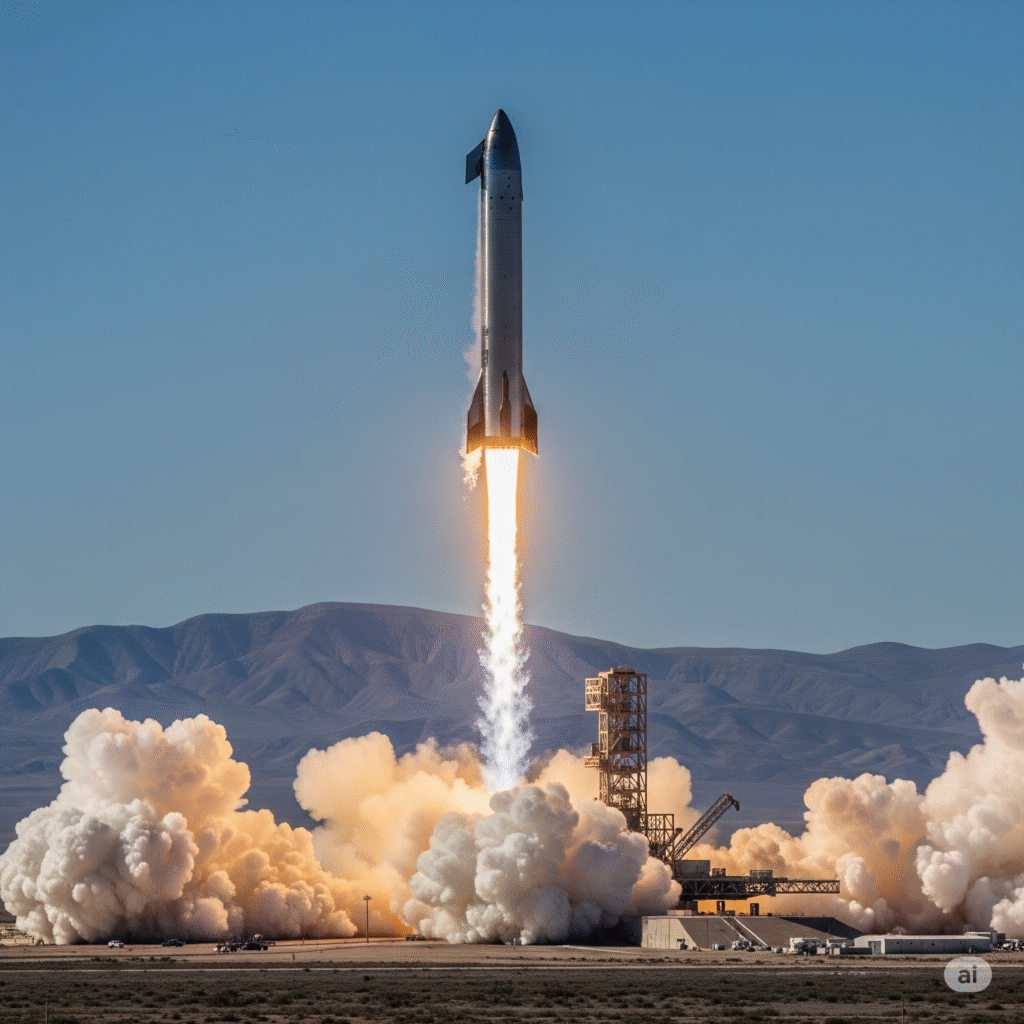
- Starship Ship 35 was mounted atop Booster 14, a Super Heavy booster previously flown during Flight 7 (January 2025).
- Both the booster and ship were reused, highlighting SpaceX’s commitment to making spaceflight more sustainable and cost-effective.
- The entire stack stood at 120 meters tall—making it the tallest and most powerful rocket ever built.
2. 🕑 Launch Time and Location
- Date: May 27, 2025
- Time: 7:00 a.m. CDT (local time)
- Launch Site: Starbase, Boca Chica, Texas
3. 🎯 Mission Objectives
The goal of Flight 9 was not just to reach orbit—but to test key systems that would support future crewed and deep-space missions.
Key mission goals:
- Reuse both Ship 35 and Booster 14
- Demonstrate hot-staging, where the second stage engines ignite before stage separation
- Test payload bay doors for satellite deployment
- Perform in-space propellant transfer simulation
- Aim for soft splashdown of the ship and booster
4. ✅ What Went Right?
a. Liftoff and Ascent
- The rocket lifted off smoothly with all 33 Raptor engines on the Super Heavy firing nominally.
- Achieved Max Q (maximum aerodynamic pressure) without issues—a critical phase in any launch.
b. Hot-Staging Milestone
- Successfully executed hot-staging, allowing the upper stage to ignite while the booster was still attached.
- This reduces propellant loss and improves efficiency—a big win for future missions.
c. Booster Separation & Return
- Booster 14 successfully separated and began its descent.
- It executed a controlled boostback burn, flip maneuver, and landing burn before splashing down softly in the Gulf of Mexico.
d. Starship in Space
- Ship 35 entered suborbital flight and reached a peak altitude of approximately 235 km.
- The ship remained in space for about an hour before beginning its descent toward Earth.
5. ⚠️ What Didn’t Go as Planned?
No space test is complete without a few hiccups—and Flight 9 was no exception.
a. Payload Door Jammed
- SpaceX had hoped to open and close the payload bay doors mid-flight.
- Unfortunately, a mechanical issue prevented the doors from opening, so no Starlink dummy payloads were deployed.
b. Heat Shield Tiles Lost
- During reentry, several heat-resistant tiles were lost.
- These are crucial for protecting the ship during atmospheric descent.
- Engineers will review thermal protection system (TPS) data to improve future flights.
c. Starship Splashdown Hard
- Ship 35 attempted a controlled splashdown in the Indian Ocean.
- The maneuvering fins and engines functioned during descent, but the final landing was harder than expected, likely due to loss of control from damaged tiles.
6. 📊 Why This Flight Matters
Every Starship flight is a stepping stone toward long-term goals like:
- Lunar missions under NASA’s Artemis program
- Mars colonization
- Point-to-point Earth travel
Flight 9 demonstrated:
- Continued progress in reusability
- Improved vehicle control and descent maneuvers
- More robust staging and orbital handling
7. 👨🚀 Future Implications
- The ability to reuse boosters and ships will massively reduce launch costs.
- Successful hot-staging and controlled descent lay groundwork for crew-rated flights.
- In-space testing like payload door and propellant transfer are essential for refueling depots and lunar cargo drops.
8. 🔧 What’s Next?
SpaceX is already prepping for Starship Flight 10, expected later in 2025. Improvements based on Flight 9 will include:
- Better payload mechanisms
- Stronger heat shield materials
- Enhanced software control during reentry
9. 🧠 The Bigger Picture
Elon Musk’s vision for a multi-planetary species hinges on the success of Starship. It’s not just a rocket—it’s an entire transport system for space.
While critics focus on what didn’t work, engineers focus on what was learned.
With each flight, SpaceX is:
- Gathering real-world data
- Improving hardware and processes
- Moving closer to Mars, the Moon, and beyond
10. 💬 In Elon’s Words
Shortly after Flight 9, Elon Musk tweeted:
“Flight 9 was a huge step forward. Reuse, hot-staging, and orbital control all showed solid progress. Fixes for payload bay and TPS are on the way.”
Final Thoughts
Starship Flight 9 wasn’t perfect—but it wasn’t supposed to be. It was an experimental flight that returned crucial data, executed new techniques, and brought SpaceX one step closer to interplanetary travel.
As history has shown—great leaps begin with bold tests.