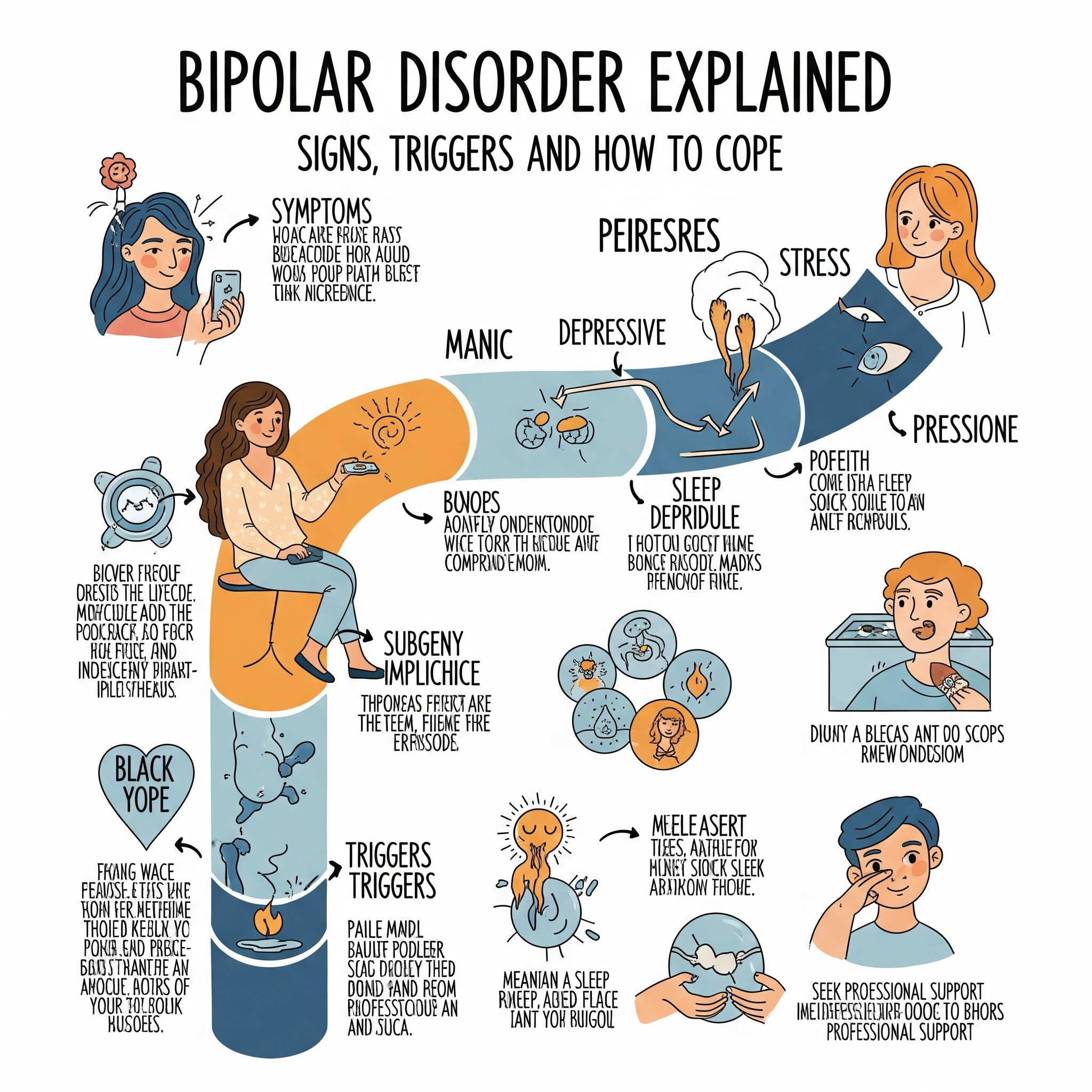

Bipolar Disorder : A mental health illness called bipolar disorder, formerly known as manic-depressive illness, is characterized by severe mood swings, including emotional highs (mania or hypomania) and lows (depression).. These shifts can disrupt daily life, relationships, and even work performance.
In this blog post, we’ll explore what bipolar disorder is, its types, symptoms, causes, and most importantly, how it can be managed effectively.
📌 What is Bipolar Disorder?
The chronic mental illness known as bipolar disorder is typified by recurrent episodes of:
- Mania (or hypomania) – elevated mood, increased activity, and impulsiveness
- Depression – sadness, low energy, and loss of interest in daily activities
These shifts in mood and behavior are much more intense than the normal ups and downs most people experience.
🔍 Types of Bipolar Disorder
There are several types, each defined by the pattern and severity of mood episodes:
1. Bipolar I Disorder
- characterized by a minimum of one manic episode, frequently succeeded by depressive episodes.
- Mania can get so bad that you have to go to the hospital.
2. Bipolar II Disorder
- Characterized by hypomanic episodes (less severe than mania) and major depressive episodes.
- Often misdiagnosed as depression alone.
3. Cyclothymic Disorder (Cyclothymia)
- marked by major depressive episodes and hypomanic episodes, which are milder than mania.
- Misdiagnosis of depression alone is common.
4. Other Specified and Unspecified Bipolar Disorders
- These include symptoms that don’t match the above categories but still involve abnormal mood changes.
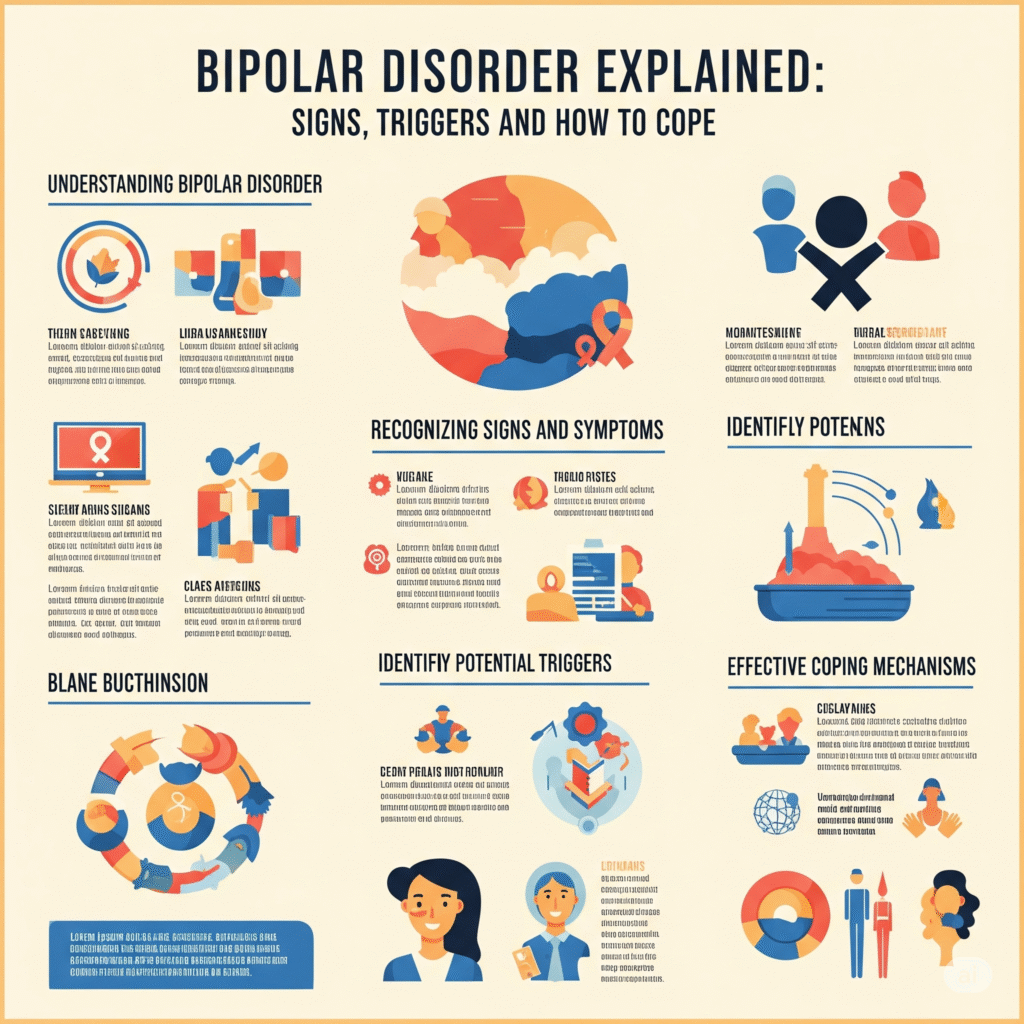
⚠️ Signs and Symptoms of Bipolar Disorder
🚀 Manic or Hypomanic Episode
- Excessive energy, restlessness
- Inflated self-esteem or grandiosity
- Decreased need for sleep
- Talkativeness or racing thoughts
- Impulsiveness (e.g., spending sprees, risky sex)
🌧️ Depressive Episode
- Persistent sadness or hopelessness
- Fatigue or lack of energy
- Changes in appetite or sleep
- Feelings of worthlessness or guilt
- Thoughts of death or suicide
Important:
Hypomania lasts at least four days, while manic episodes last at least a week or require hospitalization.
🧬 What Causes Bipolar Disorder?
The exact cause is not fully known, but several factors may contribute:
- Genetics – Your risk rises if a family member has it.
- Brain structure and chemistry – neurotransmitter imbalances and alterations in brain activity.
- Environmental triggers – Trauma, stress, substance abuse, or major life changes may activate symptoms.
🩺 Diagnosis
Bipolar disorder is diagnosed based on:
- Clinical interviews with mental health professionals
- Mood tracking over time
- Ruling out medical conditions (e.g., thyroid disorders)
Note: Misdiagnosis is common—especially confusing bipolar II with depression—so accurate assessment is crucial.
💊 Treatment Options
With the correct treatment, bipolar disorder is very treatable even though there is no cure. Typical forms of treatment include:
1. Medication
- Mood stabilizers (e.g., lithium)
- Antipsychotics (e.g., olanzapine, quetiapine)
- Antidepressants (often combined with mood stabilizers)
Important: Never stop medication without medical advice—it can trigger a relapse.
2. Psychotherapy
- Cognitive Behavioral Therapy (CBT) – helps manage negative thought patterns.
- Family-focused therapy – educates and supports families.
- Interpersonal and Social Rhythm Therapy (IPSRT) – helps stabilize daily routines.
3. Lifestyle Changes
- Regular sleep schedule
- Balanced diet and exercise
- Avoiding alcohol and drugs
- Practicing mindfulness or meditation
4. Hospitalization
- For severe episodes, especially when safety is at risk.
👪 Living with Bipolar Disorder
Managing bipolar disorder is a lifelong process, but many people lead full and productive lives. Here’s how:
- Educate yourself and loved ones about the disorder
- Track moods using apps or journals
- With the help of friends, family, or a therapist, establish a support network.
- Recognize and manage triggers
- Stick to your treatment plan
🧭 Tips for Supporting Someone with Bipolar Disorder
If someone close to you has bipolar disorder:
- Be patient and understanding
- Encourage them to stick to their treatment
- Learn about warning signs of mood episodes
- Offer support, not judgment
- Take care of your own mental health too
🆘 When to Seek Help
If you or someone you know is:
- Talking about suicide
- Becoming dangerously impulsive or agitated
- Withdrawing from life or losing touch with reality
Call a mental health professional or emergency services immediately.
🌟 Hope & Recovery
Bipolar disorder may sound intimidating, but with early intervention and consistent care, people can thrive. Millions around the world live well with bipolar disorder, finding success in relationships, careers, and creativity.
Famous individuals like Carrie Fisher, Stephen Fry, and Demi Lovato have openly shared their journeys, helping break the stigma.