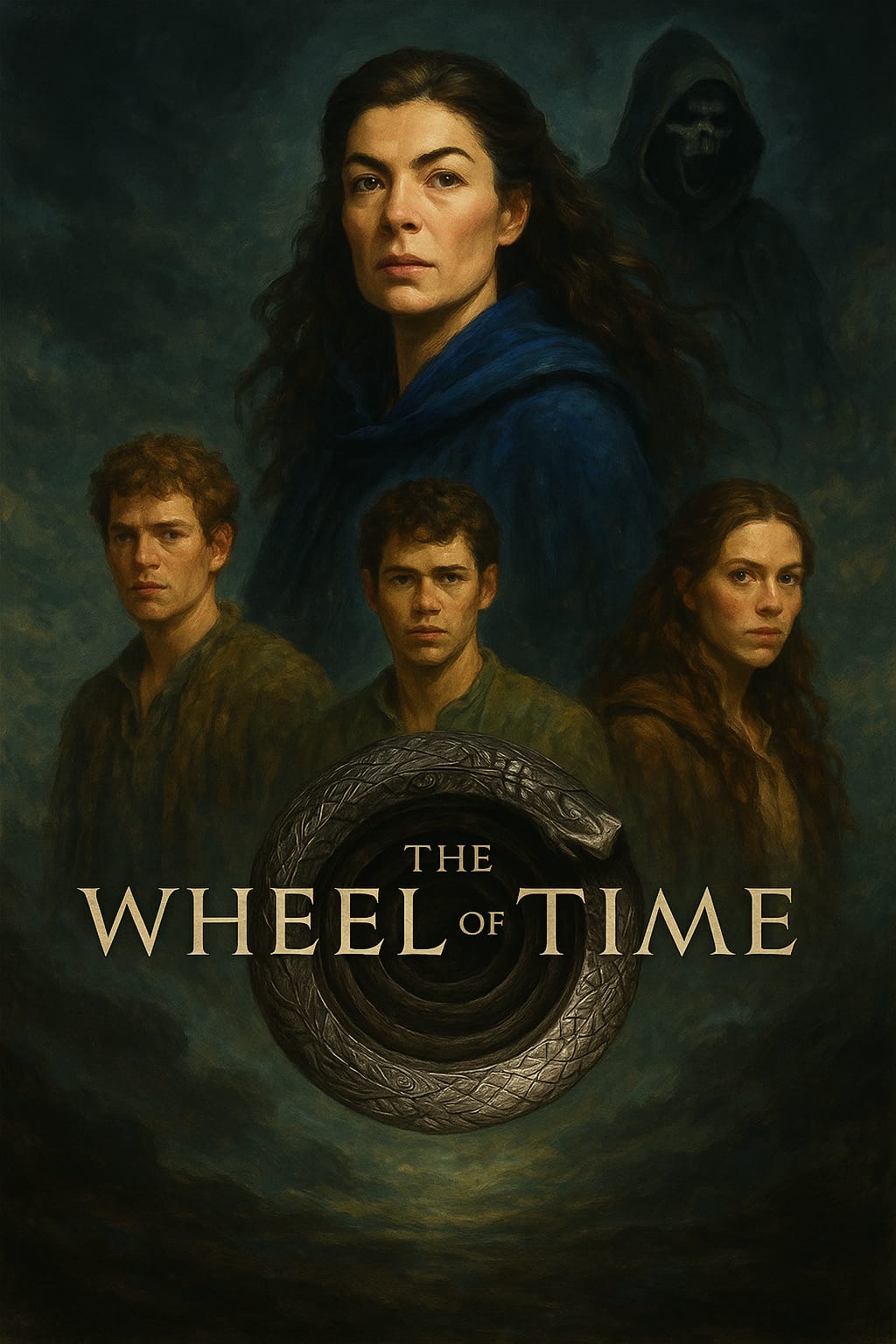

The Real Story of The Wheel of Time
When The Wheel of Time made its debut on Prime Video, the excitement among fantasy fans was palpable. Based on Robert Jordan’s legendary book series and backed by Amazon’s heavy investment in original content, the show was seen as a strong contender to rival major fantasy franchises. With sweeping landscapes, a diverse cast, and intricate lore, it appeared ready to take the crown.
However, after just two seasons, the series was unexpectedly canceled—leaving viewers with more questions than answers.
So, what went wrong? The real story behind the cancellation of The Wheel of Time is rooted in the sheer size and complexity of its source material, along with the ever-shifting demands of the streaming world.
A Universe Too Vast for the Screen
Robert Jordan’s Wheel of Time series is among the most elaborate sagas in modern fantasy. Comprising 14 core books plus a prequel, the series spans more than four million words. Character arcs, mythologies, cultures, and magical systems are all intricately woven into this tapestry.
Trying to adapt that vast, interconnected narrative into a television format was always going to be a monumental challenge. To fit the story into a few short seasons, major sacrifices had to be made. Characters were merged, timelines compressed, and pivotal moments either altered or excluded.
While these adjustments made the plot more digestible for general audiences, they often frustrated devoted readers. The show struggled to honor the complexity of the source material while also appealing to newcomers.
A Show Caught Between Two Audiences
One of the show’s most persistent struggles was trying to satisfy two very different audiences: long-time fans of the books and those entirely new to the world of The Wheel of Time.
Season one leaned heavily on exposition, attempting to explain the world without overwhelming new viewers. While helpful for the uninitiated, this approach came at the expense of character depth and emotional resonance. Meanwhile, many loyal fans were disappointed by how much the show deviated from the novels.
By the time season two aired, the cracks were showing. Storylines felt rushed, pacing became uneven, and the emotional stakes were muted. In trying to please both groups, the series ended up leaving both somewhat dissatisfied.
Expectations That Were Impossible to Meet
With over 90 million copies of the books sold worldwide, The Wheel of Time came with enormous expectations. Fans hoped for a faithful, high-quality adaptation that would honor the books’ depth and detail.
Although the show offered moments of visual grandeur and had a committed cast, it struggled to deliver the emotional and thematic complexity of Jordan’s work. Intricate character arcs were trimmed, critical themes were simplified, and world-building sometimes felt surface-level.
By season two, the weight of expectation became too much. Despite the creators’ clear admiration for the source material, the show simply didn’t have enough time—or freedom—to explore its nuances.
The Harsh Realities of Streaming Competition
In today’s high-stakes streaming environment, shows must perform fast. Streaming platforms like Amazon, Netflix, and HBO are driven by data: watch time, audience retention, and online buzz.
Even though The Wheel of Time drew solid numbers early on, engagement dwindled over time. Audience reactions grew more divided, and new fantasy offerings like House of the Dragon and The Rings of Power stole the spotlight.
With Amazon heavily focused on its investment in The Rings of Power, it’s likely that The Wheel of Time was overshadowed—both in terms of marketing and production resources. Ultimately, if a show can’t justify its costs with strong metrics, it becomes expendable—even if it’s based on a cherished franchise.
Final Thoughts: A Courageous Attempt That Fell Short
So, why was The Wheel of Time canceled? Because it tried to do the impossible: adapt one of the most complex fantasy epics of all time into a format that demands speed, accessibility, and broad appeal.
But that doesn’t mean the show was a failure. It introduced many viewers to Jordan’s world for the first time, delivered beautiful visuals, and brought inclusivity and representation to the forefront of fantasy TV. It had heart, ambition, and moments of genuine emotional resonance.
Unfortunately, the very things that made the books extraordinary—dense lore, slow-burn development, and layered storytelling—clashed with the demands of streaming television.
Perhaps someday, the Wheel will turn again, and a new adaptation will rise with the time and space to do the story justice. Until then, The Wheel of Time remains a bold, daring, and ultimately imperfect experiment in adapting fantasy for a modern audience.