

The Controversy (Trump white farmers South Africa 2025)
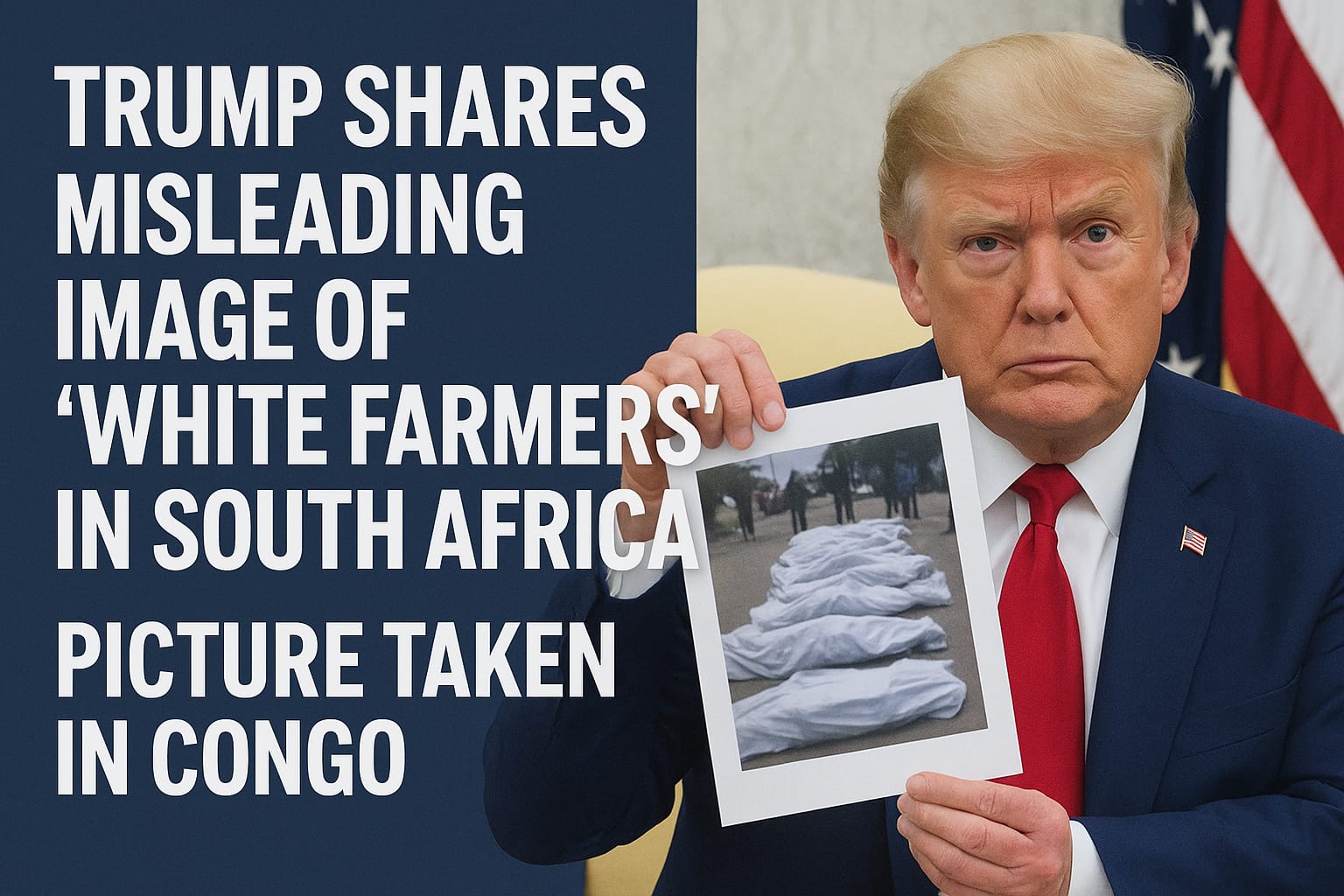
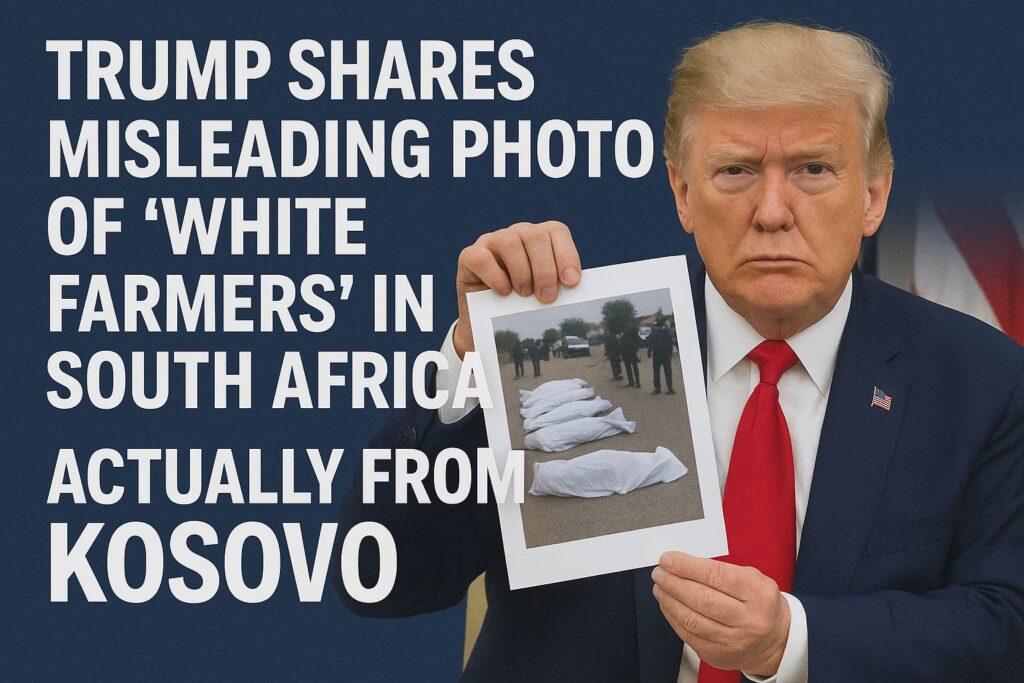
This week, former U.S. President Donald Trump found himself at the center of controversy after presenting a disturbing image during a meeting with South Africa’s president. Trump claimed the image depicted body bags containing white South African farmers who had been massacred.
Trump white farmers South Africa
The Truth Behind the Image
In a world where headlines spread faster than facts, it’s crucial to pause and look beneath the surface—especially when it comes to images and claims that stir public emotion. One such incident recently came into the spotlight when former U.S. President Donald Trump presented a disturbing image during a high-level meeting with South Africa’s president.
Trump white farmers South Africa.
Trump claimed the photo showed body bags of white South African farmers, supposedly murdered in a racially motivated attack. The image was horrifying, and his statement seemed to confirm a long-running, controversial narrative. But was it true?
According to an in-depth Reuters investigation, the answer is no. The image Trump shared was not from South Africa at all. It was actually a screenshot from a video recorded in the Democratic Republic of Congo in February 2025. The video had no link to farm murders or South Africa’s political climate. Despite this, the image was presented as proof of racial violence—a false and misleading representation of an extremely sensitive issue.
This wasn’t just an innocent mistake. It was a powerful example of how misinformation, especially when shared by influential figures, can carry dangerous consequences.
Why This Matters (Trump white farmers South Africa)
Misinformation is not just a modern annoyance—it is a serious global issue that affects real lives and shapes public opinion. When false claims like this come from people with significant platforms and loyal followings, they can:
- Fuel division
- Incite fear
- Disrupt international relations
The story of white farmers being systematically targeted in South Africa has been circulating for years. While there have been incidents of violence in the country’s rural areas, research and data do not support the claim that these crimes are racially targeted at white farmers.
Nevertheless, the idea has been used by political and media groups to promote polarizing agendas—often painting an inaccurate and incomplete picture of South Africa’s complex social issues.
When a former U.S. president amplifies this false narrative using a misleading image, he gives it a level of credibility it does not deserve. That’s why the stakes are so high. Once misinformation spreads, correcting it becomes much harder, especially when people are emotionally invested in the original version of the story.
A Call for Media Literacy
This incident serves as a critical reminder of the need for media literacy—the ability to:
- Analyze
- Question
- Verify
the content we encounter, especially online.
In an age where anyone can publish anything with the click of a button, and social media algorithms reward sensationalism over truth, our personal responsibility has never been greater.
We must not accept every image or claim at face value—no matter who it comes from. Just because something feels true or aligns with our beliefs doesn’t mean it is.
Many people trust public figures to share accurate information. When those figures get it wrong—or worse, deliberately mislead—it damages public trust. Not just in leaders, but in media, institutions, and democracy itself.
That erosion opens the door to:
- Conspiracy theories that spread quickly, blurring the lines between fact and fiction.
- Confusion that leaves people unsure about what to believe or trust.
- Social divisions that fuel misunderstandings and increase tensions within communities.
It’s not enough to rely solely on journalists or watchdogs—everyone must play a part in defending the truth.
In Conclusion
This situation is about more than just a mistaken photo. It’s a reminder of how fragile the truth can be, and how easily it can be twisted into something harmful.
If we hope to build a more informed, respectful, and united society, we must start by being careful with the facts.
Because in the digital age,
Truth isn’t just valuable—it’s essential.
Final Thoughts: Why Truth Still Matters
This episode should serve as a wake-up call—not just to politicians, but to all of us. Misinformation has real-world consequences. It can incite fear, tarnish international relations, and undermine public trust in both media and leadership. Let this be a reminder:
Before we share, we must verify.
In the digital age, truth is our greatest responsibility.


Pingback: COVID-19 Resurgence in India: What We Know About the Covid JN 1 Variant 2025 - Zenpill
Pingback: Mukul Dev Biography | Life, Movies, Death, Family & Legacy 2025 - Zenpill
Pingback: Annabelle Doll Missing? Rumors, Fires, and the Truth Behind the Haunted Legend 2025 - Zenpill
Pingback: Royal Caribbean Makes Controversial Change—Again! - Zenpill
Pingback: Bangladesh Air Force Jet Crashes Into School, 27 Dead - Zenpill