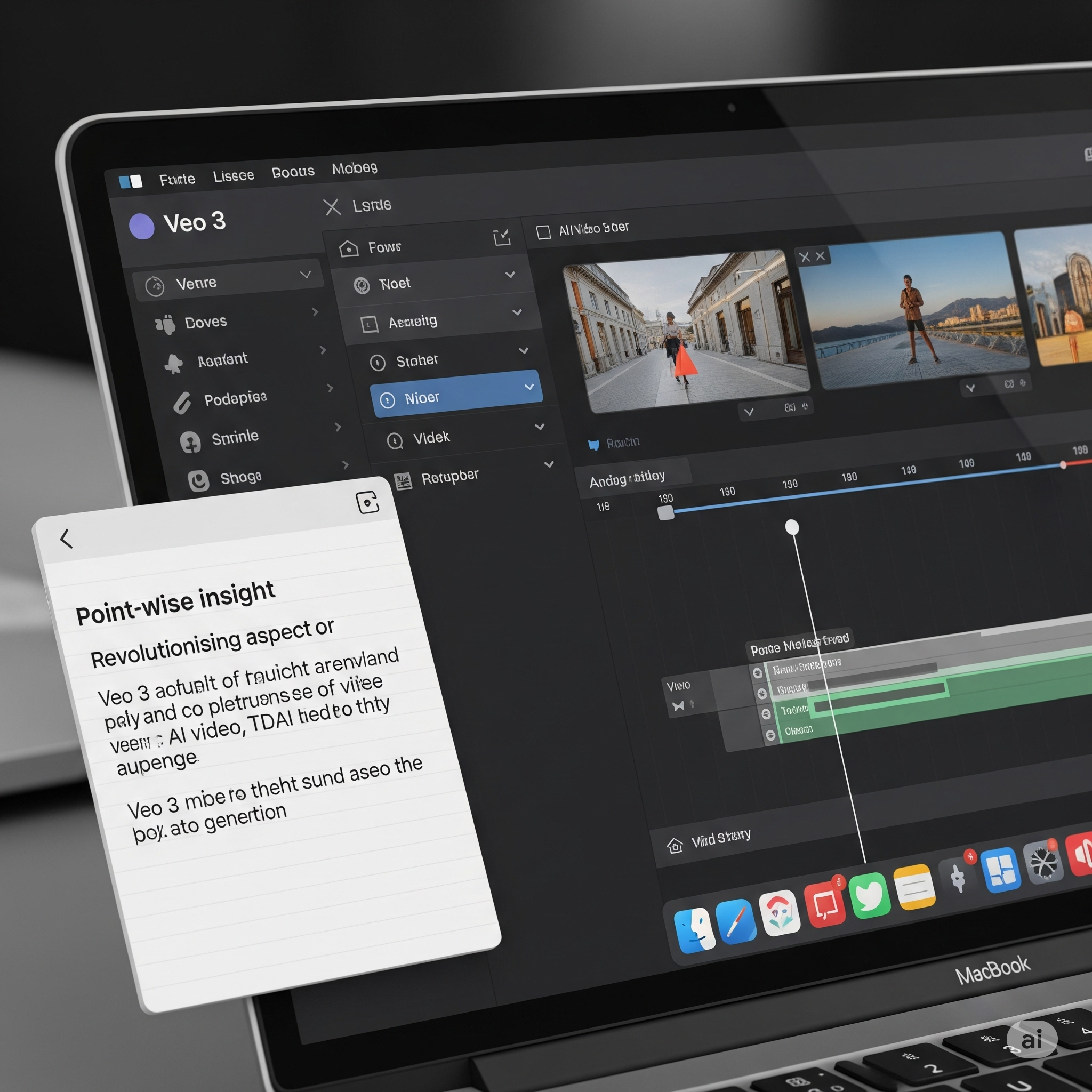

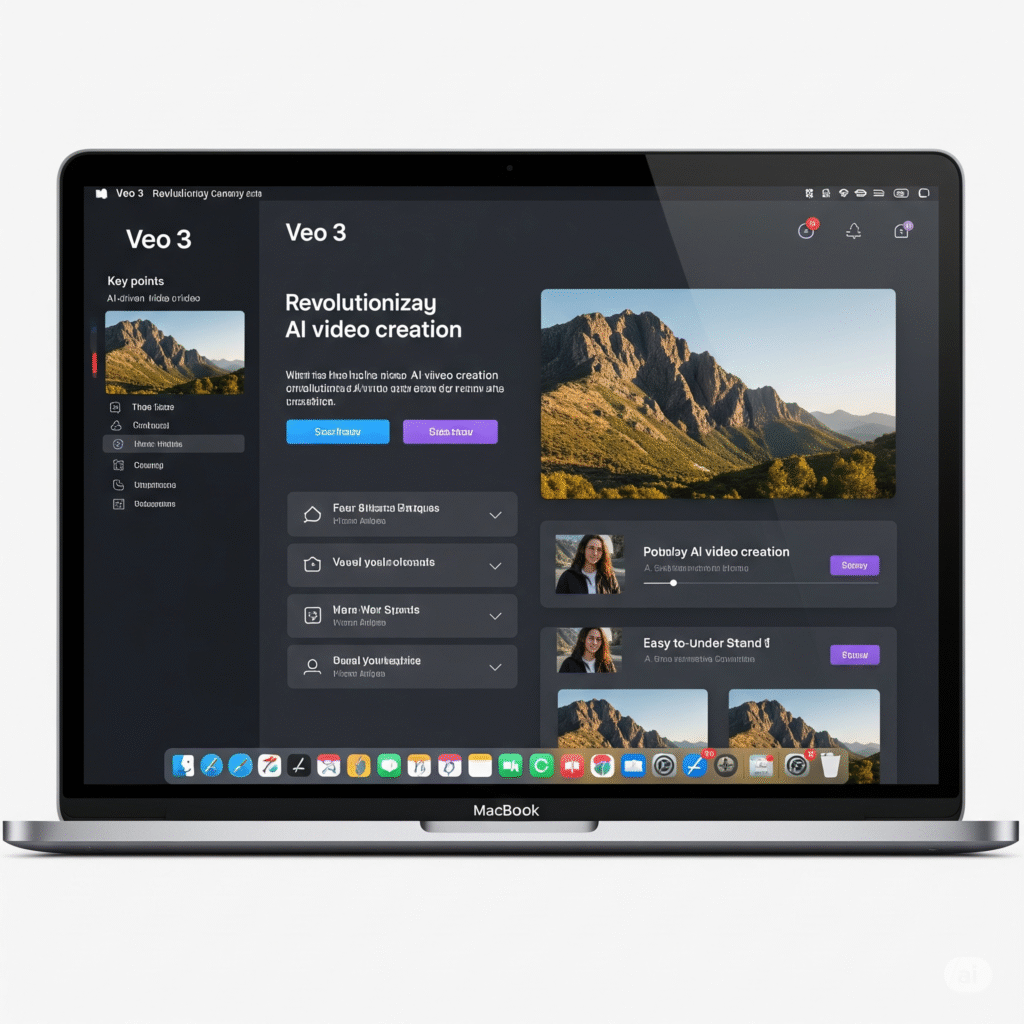
Veo 3, introduced by Google DeepMind in May 2025, is a game-changing AI model that generates high-quality videos from text or image prompts. It brings cinematic visuals, synchronized audio, and editing tools into one powerful platform.
1. What is Veo 3?
- Veo 3 is Google’s latest AI model designed for text-to-video and image-to-video generation.
- It uses advanced deep learning to turn descriptions into cinematic-quality videos.
- The model is available through Google’s AI Ultra plan.
2. Key Features of Veo 3
a. Text-to-Video Generation
- Simply enter a text prompt like “a futuristic city at night” and Veo 3 will generate a video matching that idea.
- It understands complex prompts with dynamic elements such as lighting, mood, and movement.
b. Realistic Motion and Visuals
- Veo 3 can generate scenes with smooth motion, realistic facial expressions, and lifelike physics.
- Motion accuracy and lip-sync have drastically improved compared to previous versions.
c. Audio Synchronization
- Automatically generates dialogues, background music, and sound effects based on the scene.
- Audio is context-aware, meaning it adapts based on the story or emotions in the scene.
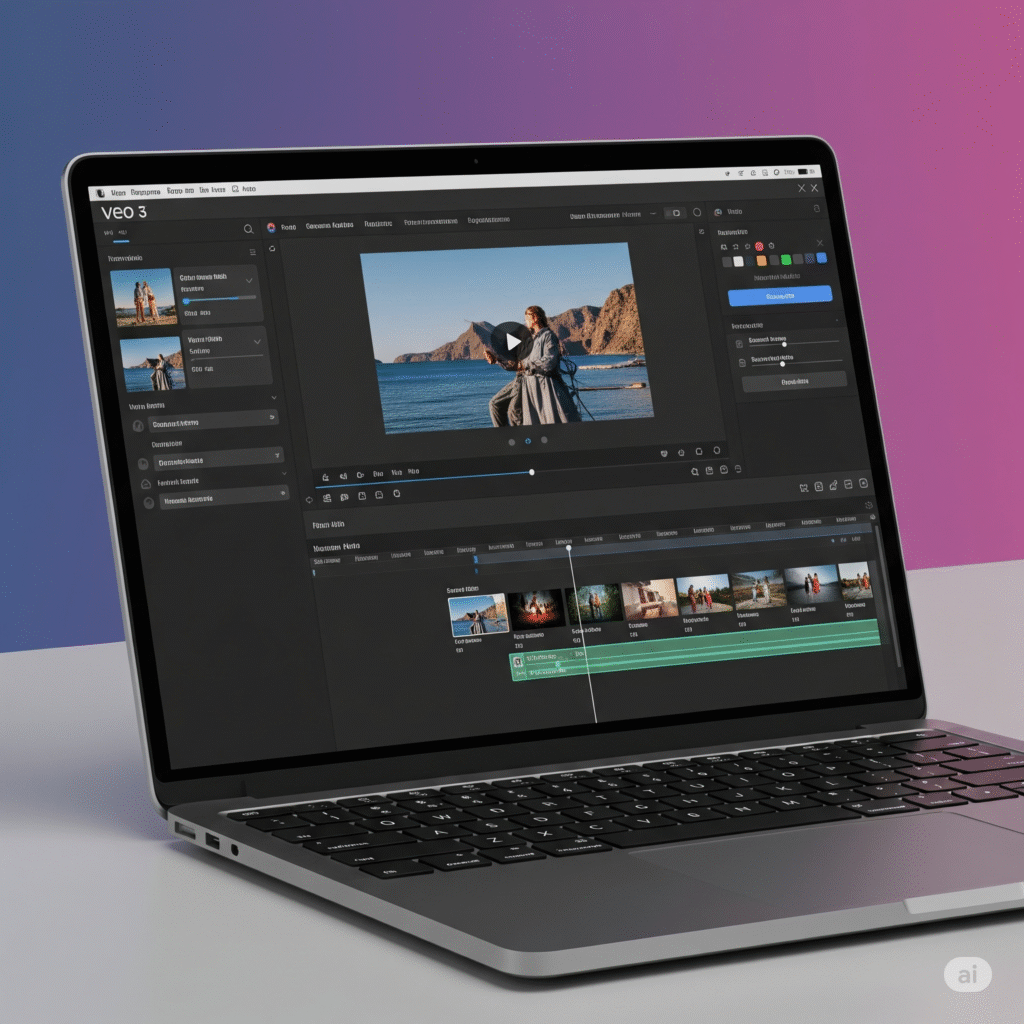
d. Flow Integration
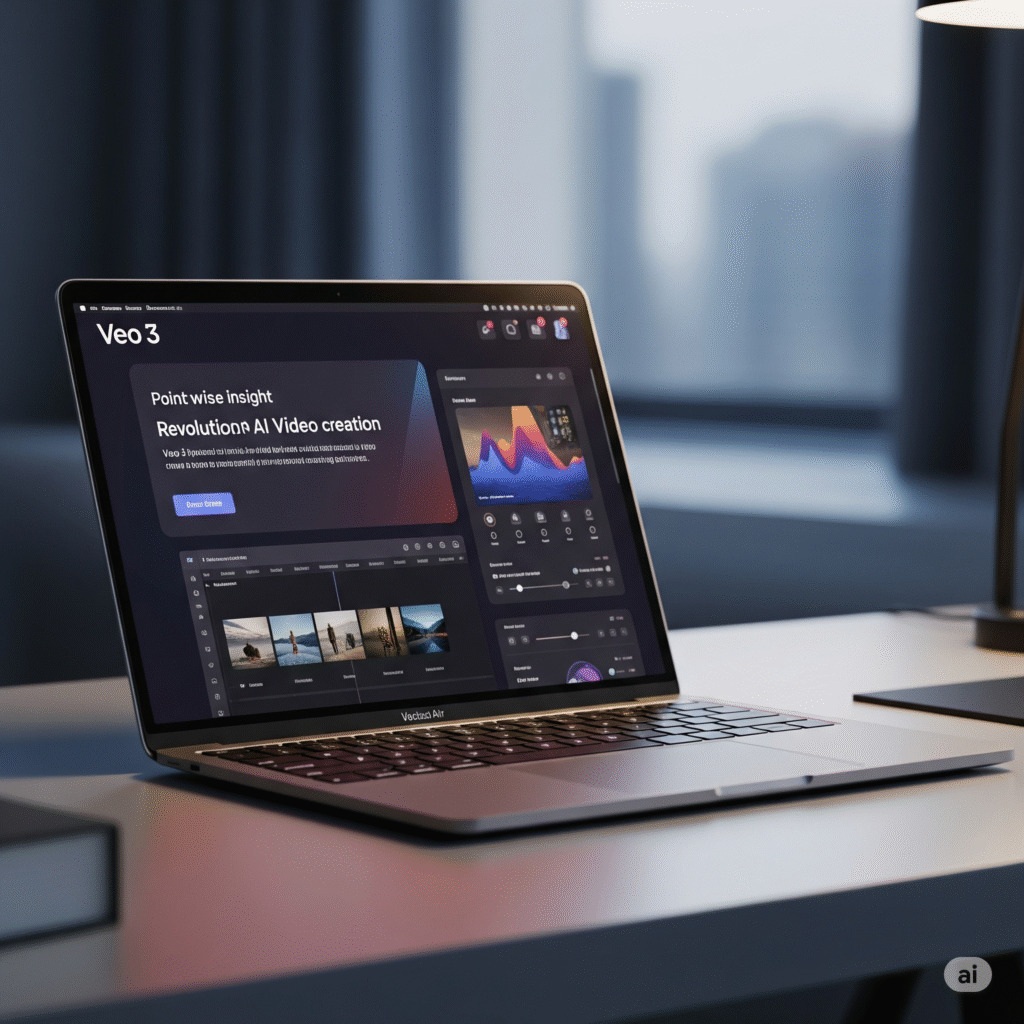
- Works with Google’s new toolset called Flow, which includes:
- SceneBuilder: Adjust video structure and transitions.
- Camera Control: Set angles, zoom, and tracking.
- Asset Organizer: Manage your prompts, images, and videos easily.
3. Applications of Veo 3
a. Filmmaking and Animation
- Filmmakers can create storyboards or even full short films without needing cameras or actors.
- Indie creators now have access to studio-level tools without studio budgets.
b. Marketing and Advertising
- Businesses can create custom promotional videos based on specific products or campaigns.
- Quick turnaround and dynamic variations help in A/B testing.
c. Education and Training
- Teachers and trainers can create animated lessons, simulations, and explainer videos with ease.
- Makes learning more interactive and visual.
d. News and Journalism
- Journalists can use Veo 3 to visually represent historical reconstructions or data storytelling.
- Great for explainer videos and visual summaries of complex topics.
e. Gaming and Prototyping
- Game designers can prototype storyboards, cinematic cut-scenes, and world-building elements.
4. Accessibility and Pricing
- Currently Available in the U.S. through AI Ultra Plan ($249.99/month).
- Includes:
- Access to Veo 3
- Flow creative tools
- Gemini 2.5 Pro
- Project Astra tools
- Wider global rollout (including India) expected later in 2025.
5. Advantages of Veo 3
- Time-saving: Reduces the time required for production from weeks to minutes.
- Cost-efficient: Minimizes the need for actors, sets, and crews.
- Creative Freedom: Allows for limitless experimentation.
- User-Friendly: No professional editing or directing skills needed.
6. Limitations & Challenges
a. High Cost for Casual Users
- $249.99/month may be expensive for students or casual users.
- Could limit accessibility until more pricing tiers are introduced.
b. Quality Dependence on Prompt
- Output quality is heavily dependent on how well the prompt is written.
- Requires users to learn prompt engineering for best results.
c. Limited Runtime
- Currently, video length may be limited (early users report ~1–2 minutes per render).
- Longer content creation will still require segmentation and stitching.
7. Ethical Considerations
a. Deepfakes and Misinformation
- Ability to create lifelike video opens doors to fake news, manipulated media, and political misuse.
- Google has implemented digital watermarks and moderation systems, but misuse is still a risk.
b. Intellectual Property Issues
- AI may unintentionally replicate copyrighted content or artistic styles.
- Raises legal questions around ownership and originality.
c. Creative Job Threat
- Professionals in video editing, VFX, and animation may face job insecurity.
- Could shift industry demand toward creative direction and prompt design.
8. Google’s Safeguards and Tools
- Watermarking: Every video includes an invisible watermark identifying it as AI-generated.
- Moderation System: Prompts are scanned for harmful or unethical content.
- Ethics Advisory: Google is working with policymakers and researchers to ensure responsible AI deployment.
9. Comparison with Previous Versions
| Feature | Veo 1 | Veo 2 | Veo 3 (Latest) |
|---|---|---|---|
| Text-to-Video | Basic | Improved | Advanced |
| Audio Integration | No | Partial | Full Sync Audio |
| Motion Quality | Low | Moderate | High (Cinematic) |
| Flow Tool Support | No | Basic | Full Integration |
| Video Length | 30 secs | 1 minute | 1–2 minutes+ |
10. Future Outlook
- Multi-language Support: Expected rollout in non-English prompt compatibility.
- Extended Video Lengths: Longer runtime and episodic story generation may come soon.
- 3D Scene Generation: Possible integration with VR or AR platforms in future updates.
- More Affordable Plans: Anticipated lower-cost options for hobbyists and students.
Conclusion
Veo 3 represents a major leap in the creative potential of artificial intelligence. From filmmakers and educators to marketers and journalists, the tool is set to transform how we create and consume video content. While it brings immense power, it also demands responsibility from users, platforms, and regulators alike.
As we stand on the edge of a new era in digital storytelling, Veo 3 is not just a tool—it’s a window into the future of imagination made real.